
How to Get Food Processing Capital Subsidy from Central Government
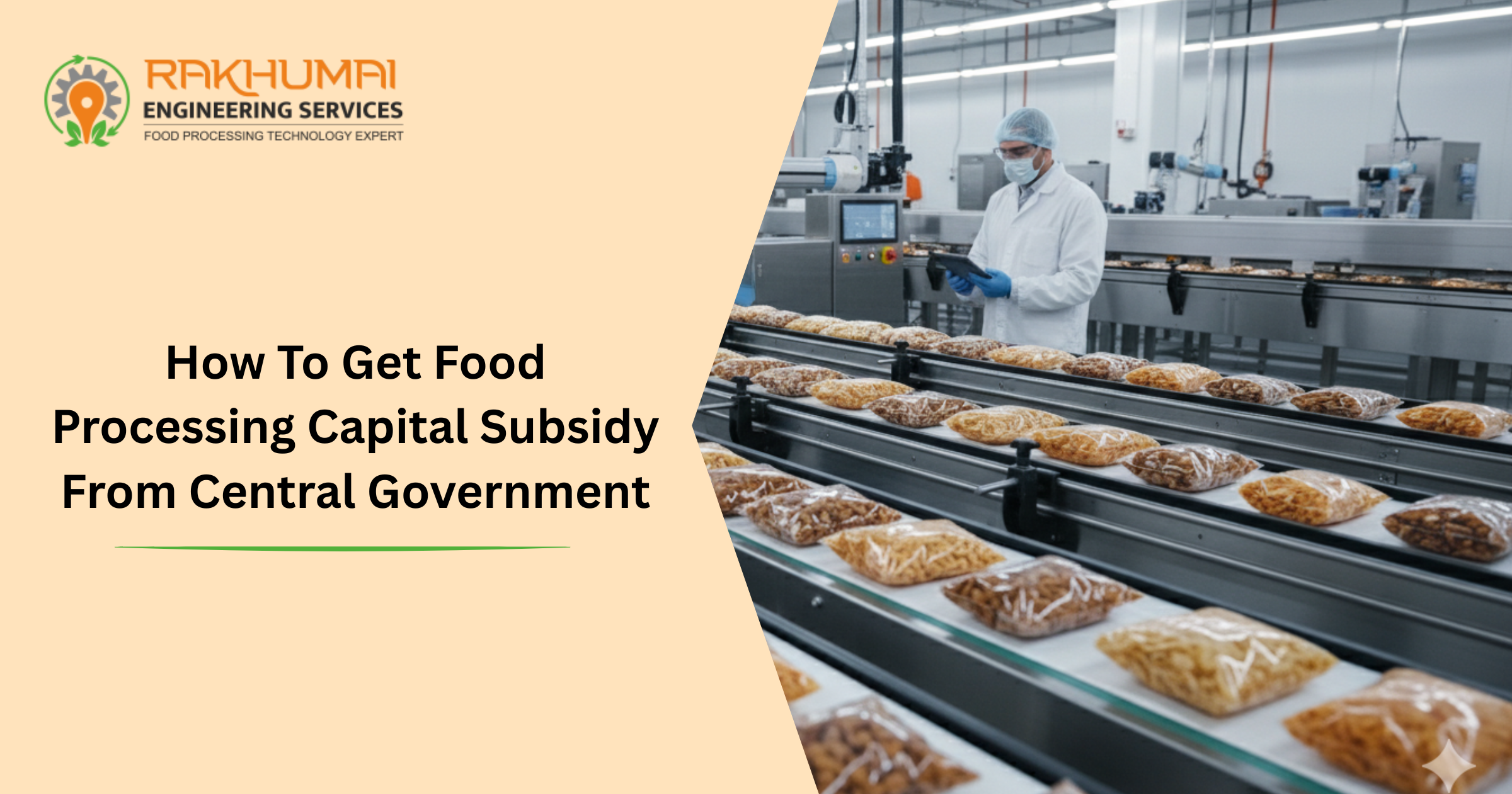
The food processing capital subsidy is financial support from the Indian Government to help entrepreneurs start or expand their food businesses. This subsidy reduces the cost of setting up processing units, purchasing machinery, and implementing quality and safety standards. To avail of it, you must have a registered food processing unit, comply with FSSAI regulations, and prepare a detailed project report (DPR).
The subsidy can be used for machinery purchase, setting up processing units, cold storage, and developing products such as RTE (Ready-to-Eat) food. Applications are submitted through the official government portal, and once approved, the subsidy reduces your initial investment and supports business growth.
Basic Requirements for Any Food Processing Subsidy
To qualify for any food processing subsidy in India, the following general requirements must be fulfilled:
Eligibility Conditions:
- Must be a registered business under Indian law.
- Must hold a valid FSSAI license.
- Can be a new startup or an existing unit upgrading operations.
- Must have proper project planning, cost estimates, and implementation strategy.
- Units producing RTE food, packaged snacks, beverages, dairy, or other processed food products are eligible.
Who Can Apply:
- Proprietor
- Partners in a partnership firm
- Farmer Producer Organisation (FPO)
- Individual entrepreneurs
- Farmers
- Private Limited (Pvt. Ltd.) / Limited (Ltd.) Companies
Required Documents and Issuing Authorities:
|
|
|
|
|
|
|
|
|
|
|
|
|
|
|
|
|
|
|
|
|
|
|
|
|
|
|
|
|
|
Note: These documents are commonly required during central subsidy applications. Exact requirements may vary by scheme.
Central vs State-Level Subsidies
Central-Level Subsidies:
- PMKSY (Pradhan Mantri Kisan Sampada Yojana)
- Eligible Units: Small, Medium, Large
- Subsidy: 25-50% of project cost
- Maximum Limit: Machinery ₹50 lakh (MSME), Infrastructure up to ₹5 crore (large units)
- PMFME (Pradhan Mantri Formalisation of Micro Food Enterprises)
- Eligible Units: Micro and Small Units
- Subsidy: Up to 35% of project cost
- Maximum Limit: ₹10 lakh per unit for plant and machinery
- Mega Food Parks Scheme
- Eligible Units: Medium and Large Units
- Subsidy: 25-50% of project cost
- Maximum Limit: Infrastructure subsidy up to ₹50 crore per park
- Cold Chain and Value Addition Scheme
- Eligible Units: Small, Medium, Large
- Grant-in-aid is available for cold storage, value addition, and refrigerated transport under PMKSY. The exact subsidy amount depends on project size and current scheme guidelines.
State-Level Subsidies:
- Provided by individual state governments, often under state agriculture or food processing departments.
- May include additional incentives for employment generation, rural development, or specific crop-based food processing.
- Subsidy percentages, limits, and eligibility can vary across states.
- Some states may allow combining their subsidies with central schemes, but this depends on each state’s policy. Applicants must check state-specific rules before applying.
Steps to Apply for the Subsidy
Applying for the food processing industry subsidy involves several steps:
1. Choose the Right Scheme
Identify whether you are applying under:
- PMKSY (Pradhan Mantri Kisan Sampada Yojana)
Supports food processing units, cold storage, and infrastructure. - PMFME (Pradhan Mantri Formalisation of Micro Food Enterprises)
Provides financial, technical, and marketing support. - Cold Chain and Value Addition Scheme
Focuses on storage, transport, and reducing food wastage.
2. Prepare a Detailed Project Report (DPR)
- Include project scope, objectives, technical details, timelines, and financial projections.
- Item-wise cost breakup for machinery, civil works, manpower, and raw material.
- Mention the intended use of the subsidy to boost capacity or quality.
3. Arrange Funding
- Apply for a term loan from a bank or financial institution.
- Prepare a means of finance chart (own contribution, loan, subsidy).
4. Register & Apply
- Apply via the SAMPADA portal for MoFPI schemes.
- Upload DPR, loan sanction letter, and all required documents.
5. Review, Approval, and Bank Guarantee
- MoFPI or nodal authority reviews feasibility, eligibility, and cost.
- If approved, a bank guarantee (usually 5% of the subsidy amount) may be required.
6. Implementation and Claim Disbursement
- Execute the project (machinery purchase, construction, quality systems).
- Submit invoices, CA-certified utilisation certificates, and proof of expenditure.
- Subsidy is disbursed in phases tied to project milestones.
7. Monitoring and Reporting
- Periodic reports may be required for auditing and future compliance.
- Maintain financial and operational records for inspection.
Additional Subsidies for Specific Products or Processes
In addition to the general food processing capital subsidy, the government also provides special or additional incentives for certain products, processes, and infrastructure. These are designed to encourage innovation, improve efficiency, and ensure compliance with quality standards in the food industry.
- RTE Foods: Special grants for processing and packaging machinery; subsidy 25-35%, maximum ₹10 lakh per unit.
- Cold Storage / Cold Chain: Subsidy for refrigerated transport and temperature-controlled storage; 35-50% subsidy, maximum cold storage ₹5 crore, refrigerated transport ₹1 crore.
- Quality Certification (HACCP, ISO, Lab setup): Supports setup and certification costs; 50% subsidy, maximum ₹5 lakh per unit.
- Mega Food Parks: Additional incentives for infrastructure and logistics; subsidy 25-50%, maximum up to ₹50 crore per park.
Benefits of Food Processing Capital Subsidy
The food processing capital subsidy helps businesses save on initial costs, improve product quality, and adopt modern equipment for better growth and competitiveness.
- Reduces initial investment costs.
- Supports innovation in RTE and processed foods.
- Encourages purchase of modern equipment.
- Enhances product quality and safety.
- Improves competitiveness in local and global markets.
How Rakhumai Can Help
Starting a food business and claiming government subsidy can be challenging. Rakhumai offers expert services in food business consulting, project setup, subsidy application, financial training, and auditing. We guide entrepreneurs from idea to implementation, including food formulation and RTE food production.
With our support, you can focus on growing your business while we handle approvals, documentation, and compliance. Start your food venture with confidence. Contact Rakhumai today for expert guidance and subsidy support.
Frequently Asked Questions
The central government subsidy for food processing is financial support to help businesses set up or upgrade food processing units, buy machinery, and improve the production of products like RTE food.
Small, medium, and large food processing units that are registered under Indian law and have a valid FSSAI license can apply for a capital subsidy.
Entrepreneurs and businesses in the food processing sector, including startups and existing units, who meet government eligibility criteria, can receive the food subsidy.
You qualify by registering your business, preparing a project report, obtaining FSSAI approval, and applying through the official government portal with all required documents.
The subsidy amount usually ranges from 25% to 50% of the project cost, with maximum limits depending on the scheme, often up to Rs. 50 lakh for machinery.