
Future of Food Processing in India: Growth, Opportunities and Challenges
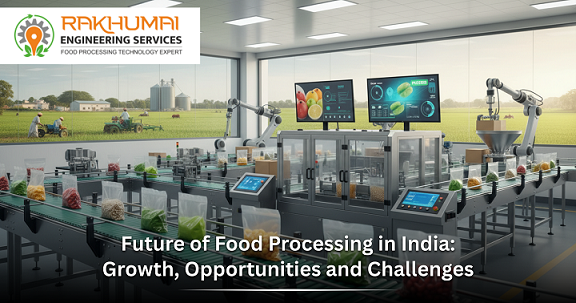
The future of food processing industry in India looks strong with rising demand for packaged, healthy, and ready-to-eat foods. India produces huge quantities of crops, fruits, vegetables, and milk, giving the sector a strong supply base.
However, the industry also faces challenges like weak cold storage, limited supply chain systems, and a shortage of trained workers. Even with these issues, the overall outlook is positive. The sector will reduce wastage, support farmers, increase exports, and create good chances for anyone planning to enter the food processing market.
Growth of the Food Processing Industry in India
India is one of the world’s leading producers of fruits, vegetables, milk, and cereals. But only about 10% of this produce is processed, which shows a huge gap and a lot of scope for future growth.
This gap has opened the door to large investments, new technologies, and more business opportunities across the country.
Main reasons behind the growth of the food processing industry in India:
- Strong supply of raw materials from diverse agricultural regions.
- Rising demand due to urbanisation and changing eating habits.
- Government support through PM Krishi Sampada Yojana, Mega Food Parks, and the PLI Scheme.
- Growing private and foreign investment in processing units and technology.
The food processing industry in India plays an important role in creating jobs, improving value addition, and reducing wastage by turning perishable produce into long-lasting processed foods.
Opportunities in the Food Processing Industry
The future of food processing industry in India is full of opportunities across multiple sectors. The market is shifting toward healthy, convenient, and value-added foods, giving entrepreneurs a chance to enter with new ideas and modern products.
Growing opportunities include:
- High value addition: Businesses can earn more by converting raw produce into packaged products like juices, snacks, pastes, powders, etc.
- Demand for healthy and nutritional foods: Fortified and millet-based foods are becoming popular in both urban and rural markets.
- Export potential: Ready-to-eat, frozen foods, seafood, and spices from India have a rising demand in international markets.
- Employment generation: Modern processing plants create jobs in areas like packaging, quality testing, logistics, and marketing.
- Technology adoption: Automation, cold chain technology, dehydration systems, and food safety tools help improve product quality and shelf life.
- Growth in specific sectors: Dairy, frozen foods, beverages, bakery products, and snack foods have strong demand and profit potential.
These opportunities make the industry attractive for new entrepreneurs who want to build long-term, stable, and profitable food businesses.
Challenges in the Food Processing Industry
Even though the sector has big potential, the food processing industry in India also faces some serious challenges that need attention:
Major challenges include:
- Weak supply chain: Limited storage, transport, and cold chain systems lead to nearly 30-40% wastage in fruits and vegetables.
- Infrastructure gaps: Many small and medium units do not have access to the modern facilities needed for large-scale processing.
- Shortage of trained workers: Workers often lack knowledge of advanced processing methods, hygiene practices, and quality control.
- Quality issues: Uneven product quality and strict food safety rules make it tough for small businesses to enter bigger markets.
- Low processing levels in key sectors: Fisheries, poultry, and certain fruits and vegetables have very low processing levels compared to global standards.
- High logistics cost: Transport expenses in India are much higher than in other countries, which increases the final cost of processed foods.
Most of these challenges can be reduced with the right planning, plant design, licensing support, and skill training, all of which we provide at Rakhumai Engineering Services.
How Food Processing Can Benefit Farmers
Food processing has the power to improve the income and stability of farmers across India. When farm produce is processed instead of being sold raw, farmers get better prices, fewer losses, and a stable income throughout the year.
How food processing helps farmers:
- Reduces wastage: Perishable crops can be turned into products like pulp, puree, dried items, or packaged foods.
- More markets for produce: Farmers get more buyers, such as processing units, exporters, and food brands.
- Steady and predictable demand: Organised supply chains give farmers regular sales instead of depending only on local mandis.
- Training and employment: Farmers and rural youth can learn new skills, work in processing units, and improve their earnings.
- Boosts rural investment: Processing units bring private investment to rural areas, improving facilities, storage, and transport.
- Better price realisation: Contract farming and tie-ups with FPOs give farmers fair and stable prices for their crops.
With the right support, farmers can earn more while becoming part of a fast-growing and profitable food processing sector.
Conclusion
The future of food processing industry in India is full of growth, innovation, and new possibilities. With rising demand, strong government support, new technologies, and a large supply base, the sector is ready for rapid expansion.
There are challenges, but with better cold chains, improved infrastructure, and trained workers, the industry can reach its full potential. This is the right time for entrepreneurs, farmers, and investors to explore food processing as a long-term and rewarding opportunity.
Frequently Asked Questions
AI will not replace food technology but will improve it by automating processes, improving safety, and increasing production efficiency.
The industry has a huge scope due to a large population, growing consumption, and increasing investment in modern food units.
It can reduce natural nutrients, increase the use of additives, and raise costs for consumers and producers.
Gen Z prefers healthy snacks, ready-to-eat foods, sustainable packaging, and unique flavours driven by social media trends.