
What Are the Five Types of Food Processing?
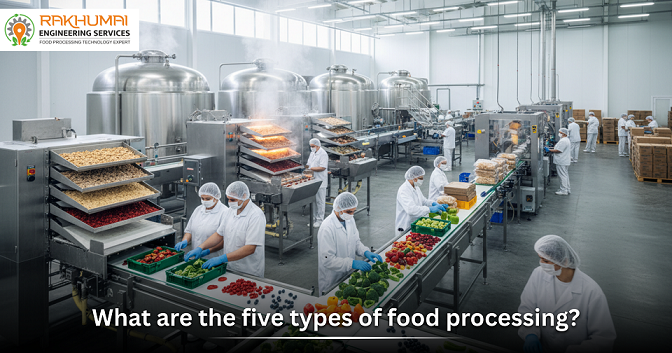
Types of food processing generally fall into five main categories rather than one fixed list. These include thermal processing, preservation, mechanical processing, fermentation, and packaging or atmosphere control.
Together, these methods include Primary Food Processing, Secondary Food Processing, Tertiary Food Processing, Minimal Food Processing, and Preservation-Based Food Processing, which convert raw food into safe, easy-to-use, and market-ready products while improving shelf life, safety, and taste.
In this blog, we explain the five main types of food processing. This guide is specially written for people who want to start or expand a food business.
What Is Food Processing?
Food processing means changing raw food materials into products that are safe to eat, easy to store, and ready for sale. This can include cleaning, heating, drying, freezing, packing, or adding basic ingredients.
When planning a food business, these questions usually come up:
- How many types of food are there based on processing?
- What is the best processing method for my product?
- What equipment and approvals will I need?
Understanding the basics will help you make better business decisions.
How Many Types of Food Are There Based on Processing?
Based on the level of processing, foods are usually grouped into five main categories. These are widely accepted in the food industry and also used by training institutes and government bodies.
|
|
|
|
|
|
|
|
|
|
|
|
|
|
|
|
|
|
1. Primary Food Processing
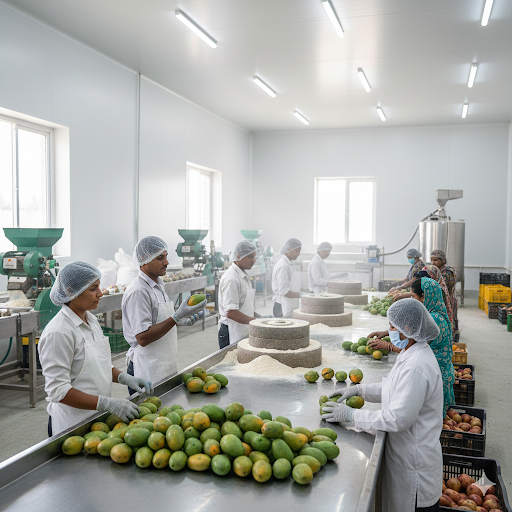
Primary food processing is the initial stage in the food value chain. It involves basic handling of raw agricultural produce to make it safe, stable, and suitable for further use.
Source: Gemini
Examples of Primary Food Processing:
- Cleaning, sorting, and grading fruits and vegetables
- Milling wheat into flour
- Dehusking and polishing rice
- Pasteurising milk
Why Start with Primary Processing:
- Minimal change to the natural structure of food
- Focus on hygiene, safety, and shelf-life improvement
- Lower capital investment compared to advanced processing stages
This type of processing is widely used in agriculture-based units, dairy plants, and grain processing mills. It often serves as the entry point for small and medium-sized food enterprises in India.
2. Secondary Food Processing
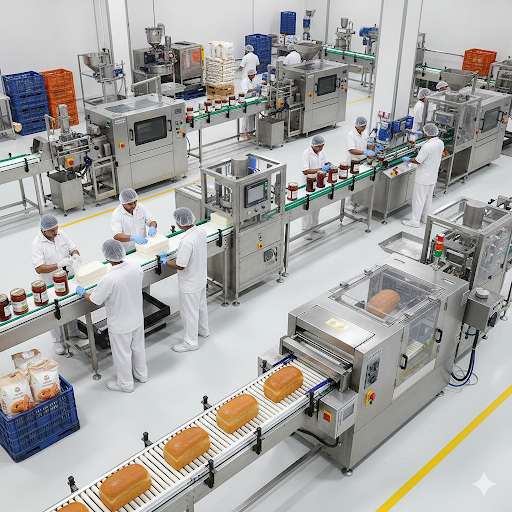
Secondary food processing involves converting primary processed materials into finished or semi-finished products with higher market value. This stage significantly alters the form, taste, and usability of food.
Source: Gemini
Examples of Secondary Food Processing:
- Bread and bakery products made from flour
- Cheese, paneer, and dairy-based products
- Pickles, jams, sauces, and condiments
- Grain-based snacks and namkeen
Why Start with Secondary Processing:
- Requires specialised equipment and skilled labour
- Strict hygiene standards and food licences
- Improves product value and profit margins
Most packaged and branded food products available in retail markets fall under this category. Due to strong consumer demand, many food startups and growing brands focus on secondary processing.
3. Tertiary Food Processing
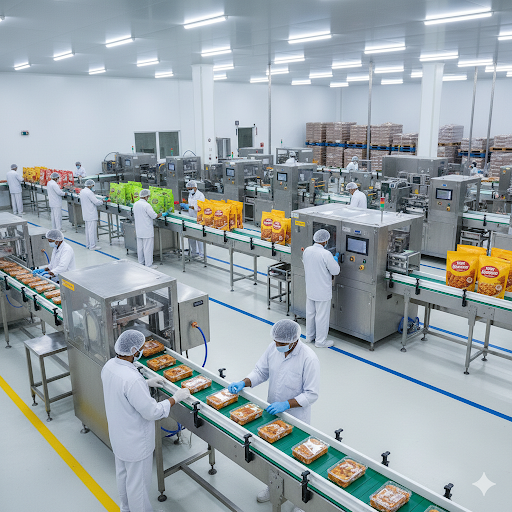
Tertiary food processing focuses on producing ready-to-eat or ready-to-cook food products designed for consumer convenience.
Source: Gemini
Examples of Tertiary Food Processing:
- Ready-to-eat meals and curries
- Frozen and chilled food products
- Instant noodles, mixes, and meal kits
- Retort-packed and pre-cooked foods
Why Start with Tertiary Processing :
- High demand in urban areas and working households
- Involves advanced food processing techniques
- Strong emphasis on packaging, storage, and distribution
This segment is among the fastest-growing types of food processing in India, driven by lifestyle changes and the expansion of online food and grocery platforms.
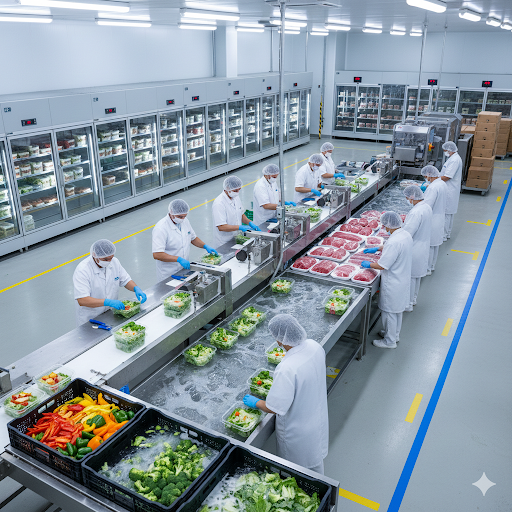
4. Minimal Food Processing
Minimal food processing involves limited intervention to preserve freshness, quality, and nutritional value while maintaining the natural appearance of food.
Source: Gemini
Examples of Minimal Food Processing:
- Washed, cut, and packed vegetables
- Fresh fruit packaging
- Chilled meat, poultry, and seafood
Why Start with Minimal Processing:
- Retains the natural characteristics of food
- Short shelf life compared to other processed foods
- Requires efficient cold chain and logistics support
This method is popular among health-focused consumers. It is also suitable for local supply chains and quick distribution models.
5. Preservation-Based Food Processing
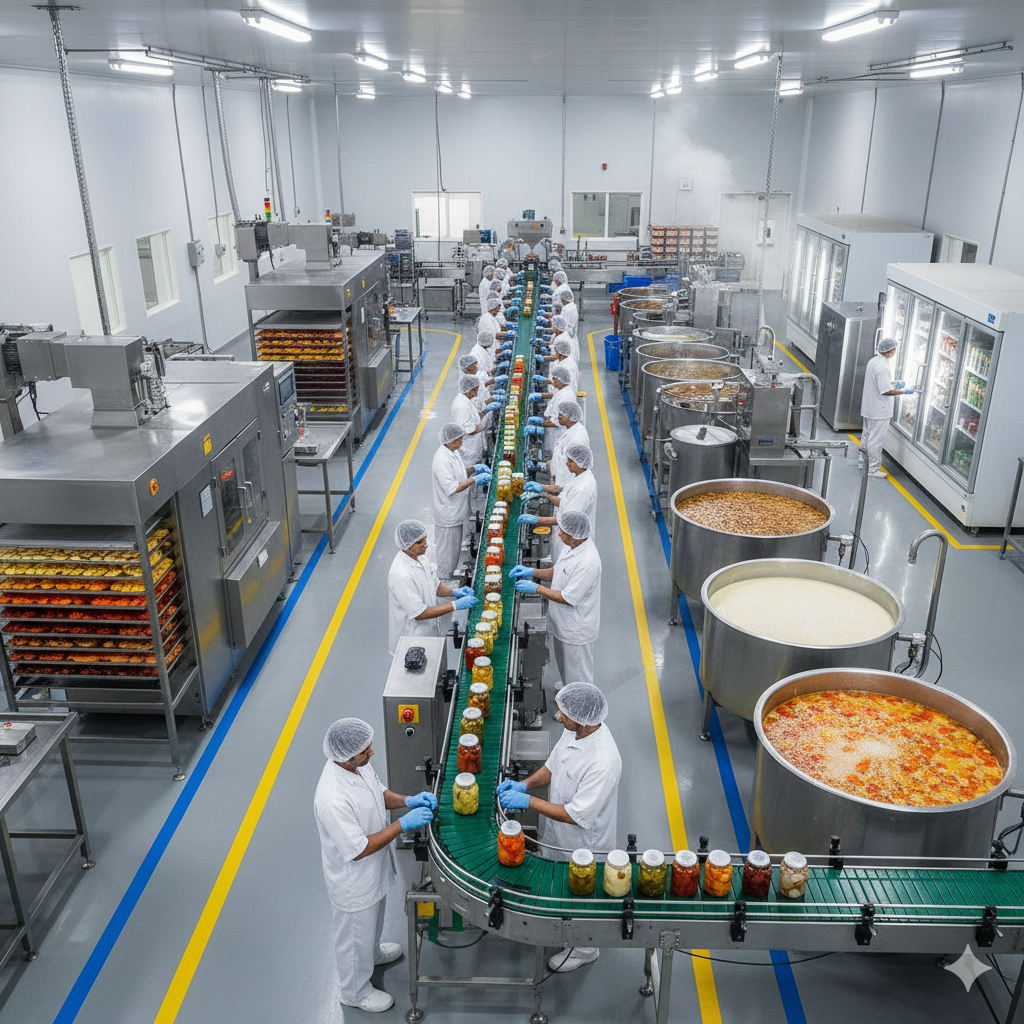
Preservation-based processing aims to extend shelf life by controlling microbial growth and spoilage using traditional and modern methods.
Source: Gemini
Common Methods Used:
- Drying and dehydration
- Freezing and chilling
- Canning and bottling
- Fermentation
- Use of salt, sugar, or oil as preservatives
Examples of Preservation-Based Food Processing::
- Dried fruits, spices, and herbs
- Canned vegetables and pulses
- Fermented products such as curd, pickles, and idli batter
Preservation techniques have been used in India for centuries. With modern technology, these methods now offer improved product consistency, safety, and quality control.
Methods of Food Processing Used in India
Across all five categories, different methods of food processing are used depending on the product and scale.
Some common methods include:
- Heating and boiling
- Cooling and freezing
- Drying and roasting
- Fermentation
- Packaging and sealing
Choosing the right method depends on raw material, shelf life, and target market. Different food processing methods have different rules and compliance needs. With the right training and regular audits, food units can follow these rules easily, avoid issues, and run their operations smoothly for long-term growth.
Food Processing Techniques
If you are planning a food unit, you should be aware of basic food processing techniques, such as:
- Thermal processing (heat-based)
- Cold processing
- Mechanical processing (cutting, grinding)
- Chemical-free preservation
Each technique has its own cost, equipment needs, and compliance rules.
Conclusion
Food processing is not just about turning raw materials into food products. It is about choosing the right type of food processing, the correct method, and the suitable technology to match your product idea, budget, and market demand.
From primary processing to preservation-based methods, each category serves a different business purpose and requires a clear plan for equipment, hygiene, storage, and compliance.
For anyone planning to enter the food sector, understanding these stages early can help reduce risks, control costs, and build a scalable operation. The success of a food business depends not only on the product but also on how well the processing method aligns with regulations, shelf life, and consumer expectations.
Frequently Asked Questions
Primary and secondary food processing are best for small businesses because they need lower investment and simpler equipment compared to advanced processing methods.
Yes, food processing can be profitable in India due to high demand, government support, and growing consumption of packaged and ready-to-eat foods.
Yes, food processing units must follow food safety rules and need approvals such as FSSAI registration or a licence, depending on the size and type of business.
Yes, traditional foods like pickles, snacks, and fermented products can be scaled using modern processing while maintaining taste, quality, and safety.