
FSSAI Packaging and Labelling Regulations: A Complete Guide
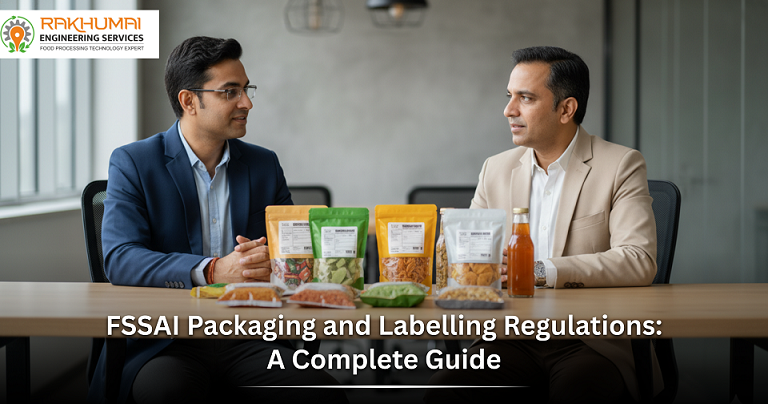
The FSSAI has made clear guidelines for packaging and labelling food products in India to protect consumers and maintain food safety. These FSSAI packaging and labelling regulations tell food business owners what information must appear on food packages, what materials are safe, and how labels should be shown so buyers get correct and useful details about the product.
In this guide, we will explain these rules in detail. You will learn what details must be mentioned on your product label, what should not be left out, and how to prepare your packaging and labelling so your food business stays accurate and trustworthy.
What are the FSSAI Packaging and Labelling Regulations?
The FSSAI packaging and labelling regulations are legal guidelines issued by the Food Safety and Standards Authority of India. They cover how food products should be packaged, labelled, and presented to consumers. Following these rules make sures that the food is safe, hygienic, and informative for buyers.
These regulations apply to all pre-packaged food products and include general packaging requirements, material safety standards, and labelling rules.
Requirements for Food Packaging
Proper packaging protects the food from contamination and extends shelf life. Important requirements include:
- Use containers that are clean, safe, and made from approved materials such as food-grade plastic, glass, tin, or aluminium.
- Avoid rusty or damaged containers and enamelled containers that have chipped surfaces.
- For plastic packaging, follow Indian Standards (IS) specifications for materials like Polyethene, PVC, Polypropylene, and PET.
- Special products like milk, dairy, edible oils, and canned foods have additional packaging requirements. For example, milk containers must be sealed immediately after filling, and canned products should be free of dents and leaks.
FSSAI Labelling Regulations
Labelling is a critical part of food packaging and labelling. It provides consumers with essential information about the product, including:
- Product name: Clearly mention the name of the food product.
- Ingredients list: List all ingredients in descending order of weight.
- Manufacture and expiry date: Include date of manufacture, “best before,” or “use by” date.
- FSSAI license number: Display the FSSAI registration or license number prominently.
- Nutritional information: Provide details on calories, proteins, fats, carbohydrates, and other nutrients.
- Allergen information: Clearly state if the product contains allergens like nuts, dairy, or gluten.
- Vegetarian/non-vegetarian mark: Use green for vegetarian and brown for non-vegetarian foods.
FSSAI Labelling Checklist
To make following the rules easier, businesses can use the FSSAI labelling checklist:
- Product name and category
- Net quantity
- Ingredients and additives
- Nutritional information
- Allergen warnings
- FSSAI license number
- Date of manufacture and expiry/best before date
- Storage instructions
- Vegetarian or non-vegetarian logo
- Manufacturer or importer details
Benefits of Following Food Packaging and Labelling Regulations
Following these regulations has many advantages:
- Maintains food safety and reduces the risk of contamination.
- Builds consumer trust and credibility.
- Avoids legal penalties and fines.
- Improves product presentation and shelf appeal.
Common Mistakes to Avoid
Even small errors in packaging and labelling can cause issues and affect customer trust. Here are some common mistakes food businesses should avoid.
- Using unapproved packaging materials
- Incorrect or missing FSSAI license number
- Incomplete ingredient or nutritional information
- Missing allergen warnings or wrong vegetarian/non-vegetarian symbols
Avoiding these common mistakes is important. With Rakhumai’s expert consultation, you can prevent costly errors and maintain your brand’s credibility.
How Rakhumai Can Help Your Food Business
Starting and running a food business can be challenging. Rakhumai offers expert support in:
- Food business consulting and project setup
- Guidance on FSSAI registration
- Assistance with subsidies and schemes
- Financial services and training for business owners
- Auditing and making sure all packaging and labelling standards are met
By working with us, you can make certain that your food products meet all FSSAI packaging and labelling regulations and reach customers safely.
Food must be packaged in clean, safe, and approved materials to protect it from contamination and preserve quality.
Labels must clearly show product name, ingredients, FSSAI license number, manufacturer and expiry dates, nutritional info, and allergen warnings.
All pre-packaged foods must follow FSSAI rules for accurate information, including quantity, ingredients, nutritional details, and manufacturer information.
The updated guidelines emphasise proper packaging materials, clear labelling, nutrition facts, allergen info, and correct vegetarian/non-vegetarian symbols.
Labels should include product name, ingredients, net weight, FSSAI license number, expiry date, storage instructions, and any allergen warnings.