
What Is BRC Certification? Guide for Food Businesses in India
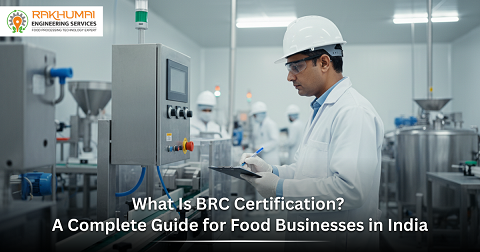
If you are thinking about starting a food business or planning to enter export markets, you may have come across the term "BRC certification" and wondered why it is so important. It is recognised worldwide as a mark of strong food safety and quality practices, and many retailers and importers look for it before working with a supplier.
In this guide, we will break down what it means, why it matters for your business, and how it can support growth in both Indian and international markets.
What Is BRC Certification?
BRC stands for British Retail Consortium. Today, it is known as BRCGS (Brand Reputation through Compliance Global Standards). It is a global food safety standard used by manufacturers, processors, packaging companies, and storage units.
The BRC food standard focuses on:
- Food safety
- Quality management
- Hygiene practices
- Legal compliance
- Product traceability
If a company gets BRC certification, it means its food production system meets international safety standards.
What Is BRC in Export?
If you are new to the food industry, you may be asking what is BRC in export.
When you export food products to countries like the UK, Europe, or some parts of the Middle East, buyers often demand BRC certification. It builds trust with foreign retailers and importers.
So BRC in export is proof that your food production system follows globally accepted safety and quality rules.
Without this certification, it can be difficult to enter international supermarket chains.
Why Is BRC Certification Important for Food Businesses?
Understanding BRC certification benefits is important if you want long-term growth.
1. Global Market Access
Many international buyers, retailers, and importers prefer or require the brc food standard before they work with a supplier. Having this certification makes it easier to enter export markets and supply supermarket chains, especially in Europe and the UK.
2. Better Brand Image
BRC certification shows that your business follows strict food safety and quality practices. This improves your reputation in the market and makes your brand look more professional and trustworthy to customers and partners.
3. Strong Quality System
The certification process helps you set up clear procedures, proper documentation, and regular checks. It also ensures staff are trained well, which leads to better control over production and consistent product quality.
4. Reduced Risk
Following BRC guidelines helps identify and control risks in the production process. This reduces the chances of contamination, product recalls, customer complaints, and legal problems, protecting your business in the long run.
5. Increased Customer Trust
When customers see that your products meet recognised safety standards, they feel more confident buying from you. Retailers and distributors are also more willing to build long-term partnerships with certified suppliers.
Who Needs BRC Certification?
BRC certification is useful for:
- Food manufacturers
- Food processors
- Exporters
- Packaging companies
- Storage and distribution units
- Private label suppliers
If you are planning to export food products, then understanding what is BRC in export becomes even more important.
Is BRC Certification Mandatory in India?
In India, BRC certification is not legally mandatory like FSSAI registration. The Food Safety and Standards Authority of India (FSSAI) regulates food safety within the country.
However, BRC certification is often required by:
- International retailers
- Export buyers
- Supermarket chains
So, while it is not compulsory under Indian law, it becomes necessary if you want to grow globally.
Process to Get BRC Certification
If you want to know how to get BRC certification, here is a simple overview:
Step 1: Gap Analysis
Check your current food safety system and compare it with the BRC food standard.
Step 2: Documentation
Prepare policies, procedures, and safety records.
Step 3: Implement Changes
Upgrade factory layout, hygiene systems, and quality checks if needed.
Step 4: Staff Training
Train employees on food safety and compliance.
Step 5: Internal Audit
Conduct internal audits before applying.
Step 6: Certification Audit
An approved certification body will inspect your facility.
If you pass the audit, you will receive the BRC certificate.
How BRC Certification Helps New Food Startups
If you are starting a food business in India, knowing what is BRC certification can help you plan better from day one.
Instead of upgrading later at high cost, you can:
- Design your factory layout properly
- Set up a strong quality system
- Train staff early
- Prepare for exports from the beginning
This saves money and builds a strong foundation.
Conclusion
Understanding what BRC certification means can help you build a strong foundation for a safe and trusted food business. By following the BRC food standard, you can improve product quality, meet buyer expectations, and prepare your business for export opportunities.
If you plan to grow in international markets, learning about BRC requirements early and setting up the right systems will make expansion smoother and support long-term success.
Frequently Asked Questions
It means a food business meets international safety and quality standards set under the BRC food standard and has passed an official audit.
It helps businesses prove their products are safe and high quality, making it easier to supply retailers and export to global markets.
BRC focuses mainly on food safety and retail requirements, while ISO covers broader quality and management systems across many industries.
No, it is not legally compulsory in India, but many international buyers require it for exports and large supply contracts.
The purpose is to ensure food products are produced safely, meet legal rules, and maintain consistent quality for customers and retailers.